
Automotive Training Equipment Verification & Validation
HS Verification & Validation is applied after the custom training equipment configuration and technical requirements have been confirmed. The focus is not simply on whether components work, but on whether the actual engineering implementation, system integration, and configured training functions perform as intended.
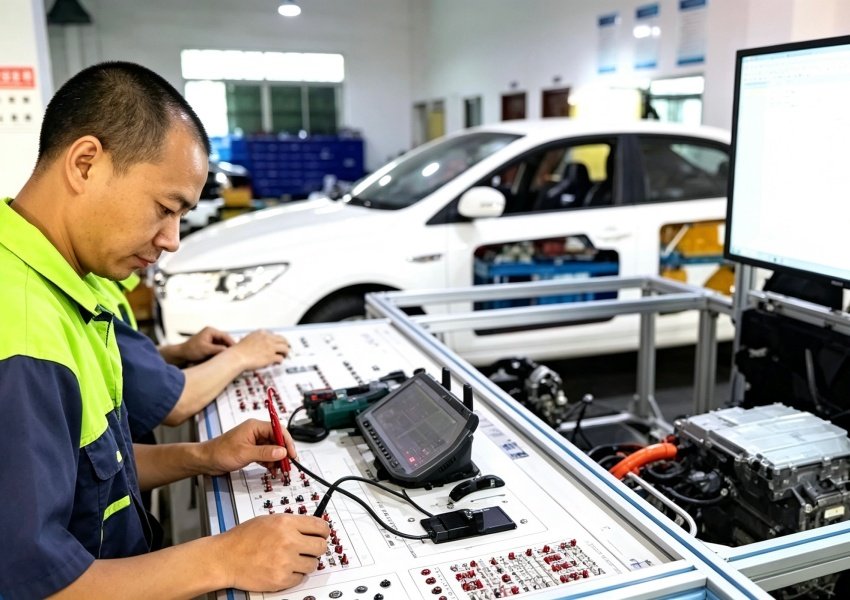
What Can Go Wrong Without Pre-Production Verification?
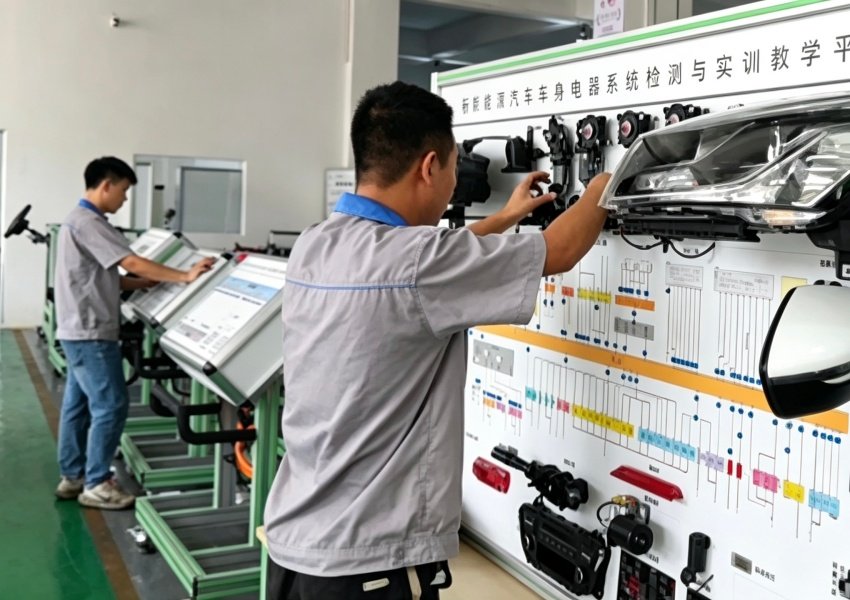
A custom training equipment project can be technically manufacturable while still failing to deliver the intended training result. The risk often appears at the boundaries between components, systems, interfaces, and practical training functions.
Typical problems include:
- The actual configuration differs from the approved solution.
- Individual components work correctly, but the integrated system produces an unexpected response.
- Electrical connections are correct, but the resulting system behavior does not support the intended operation.
- Measurement points or diagnostic interfaces exist but do not adequately support the specified training task.
- A fault can be introduced, but the resulting symptom or system response does not form the intended diagnostic condition.
- A configured function operates technically but does not provide the required practical training outcome.
The key issue is not simply whether the equipment can be manufactured.
Manufacturing feasibility is not the same as engineering correctness or training suitability.
Pre-production verification is therefore used to identify these issues before they become part of the production result.
How HS Validates Real-World Training Performance
Engineering verification confirms that the equipment has been implemented according to the approved solution. Training performance validation goes one step further: it confirms that the configured equipment can actually support the specified practical training tasks.
From Function Existence to Training Task Completion
HS evaluates whether a configured function can actually be used to perform the specified training task.
Function → Operation → Training Task
The focus is therefore not simply whether a function exists, but whether it produces a usable training operation.
From Electrical Connection to System Response
For electrical and control-related training equipment, correct wiring is only one part of the result.
Where applicable, HS also evaluates whether the configured electrical implementation produces the expected control and system response.
Connection → Control → System Response
From Measurement Point to Measurement Task
For specified measurement training, HS evaluates whether the configured measurement points and connections support the intended measurement operation and provide the expected result.
A measurement point is therefore considered in relation to the training task it is intended to support.
From Fault Simulation to Diagnostic Practice
For configurations with fault simulation, HS evaluates the complete diagnostic relationship:
Fault Introduction → Observable Symptom → Measurement/Diagnosis → System Response
The objective is to confirm that the configured fault condition supports the intended diagnostic training task, rather than merely confirming that a fault can be switched on.
Training Performance Under the Configured Operating Conditions
The final validation is performed against the training functions and operating conditions defined for the selected configuration.
Only the functions applicable to the actual equipment configuration are evaluated.
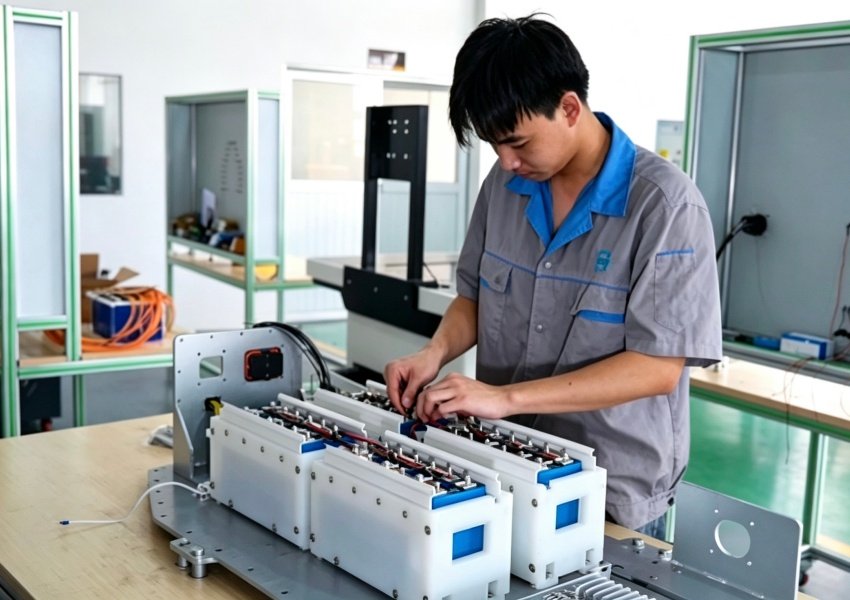
What Happens When Verification Finds a Problem?
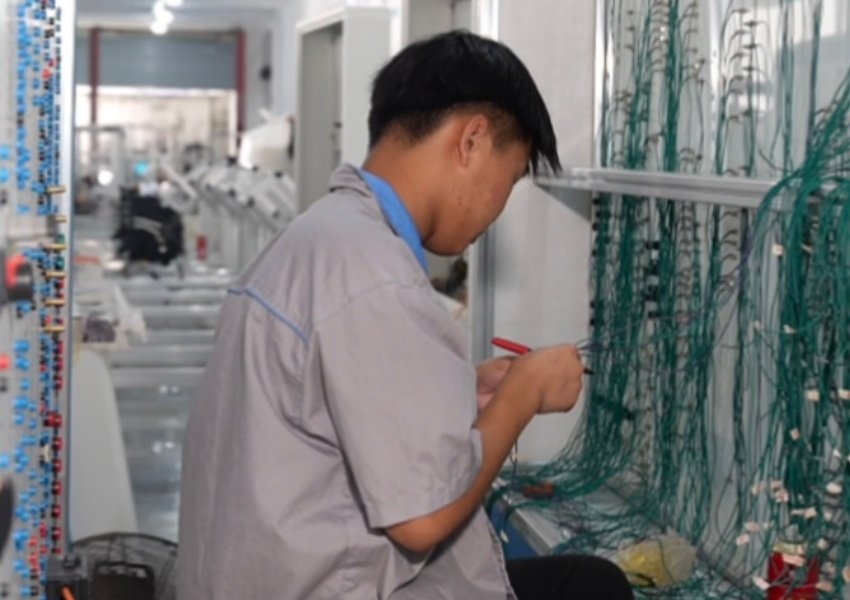
When verification identifies a deviation, HS focuses on determining the engineering cause, applying the appropriate correction, and confirming that the required result has been restored.
Identify the Root Cause
HS distinguishes the observed symptom from the engineering condition causing it. The analysis may trace the deviation through configuration, components, connections, interfaces, system interaction, and functional logic.
Apply Targeted Corrective Action
Corrective action is directed at the identified engineering cause rather than simply making the test result acceptable. Depending on the deviation, this may involve configuration, component selection, connections, interfaces, or system integration.
Re-Verify the Corrected Result
After correction, the affected function or system is verified again to confirm that the original deviation has been resolved and the required result is achieved.
How HS Confirms the Final Equipment Before Production & Shipment
Verification is only useful if the verified result remains consistent through production and final delivery. HS therefore maintains a connection between the verified solution, the production version, and the final equipment.
Final Confirmation Before Production
Before production, HS confirms the production version against:
Verified configuration
Approved technical specifications
Validated training functions
Confirmed modifications
Final project requirements
The purpose is to ensure that the version released for production corresponds to the version that has been verified.
Control Changes That May Affect Verified Results
If changes occur after verification, HS assesses whether they can affect an existing verification result.
Relevant changes may include:
Component changes
Interface changes
Layout changes
Configuration changes
Training-function changes
Where a change affects a previously verified result, the affected area is reassessed or re-verified as required.
Final Confirmation Before Shipment
Before shipment, HS confirms that the completed equipment:
Matches the approved configuration
Includes specified components and accessories
Reflects confirmed modifications
Completes specified functional checks
Remains consistent with the verified project result
Where applicable, final checks may cover operating, electrical, diagnostic, fault-simulation, or dynamic functions.
The final control relationship is:
Verified Result → Production Equipment → Delivered Equipment.
FAQ About Automotive Training Equipment Verification & Validation
1.Can HS Validate a Completely New or Highly Customized Training Concept?
Yes, where the project requirements and technical scope can be clearly defined. For non-standard projects, the verification approach can be established around the confirmed system architecture, configuration, training functions, interfaces, operating requirements, and project-specific specifications.
2. How Does HS Handle Requirements That Cannot Be Judged by a Simple Pass/Fail Test?
Some requirements depend on actual operation rather than a single measurement or component status. For these cases, HS can evaluate operation sequences, training workflows, measurement usability, diagnostic processes, fault-training logic, and system interaction against the specified project requirements.
3. How Does HS Manage Verification When Multiple Systems Are Integrated into One Training Unit?
The verification considers both individual system functions and the relationships between integrated systems. Particular attention is given to interfaces, electrical connections, operating sequences, system interaction, and the training functions that depend on the integrated configuration.
4.Can Verification Requirements Be Agreed Before the Project Starts?
Yes. Where practical, the verification scope and acceptance criteria can be discussed based on the confirmed configuration, technical specifications, training requirements, and project-specific functions before the verification stage begins.
5.How Does HS Prevent Changes from Invalidating an Already Verified Result?
Changes made after verification are assessed for their potential impact on existing verification results. If a change affects a previously verified configuration, function, interface, or system relationship, the affected area can be reassessed or re-verified.
6.What Evidence Can Customers Use to Confirm That the Customized Equipment Has Been Verified?
Depending on the project requirements, verification evidence may include applicable test records, configuration confirmation, verification results, identified issues and corrective actions, re-verification results, and final confirmation of the completed equipment.
Discuss Your Verification Requirements
Have a confirmed custom training equipment solution that needs technical verification before production?
Share your configuration, technical specifications, training functions, diagnostic or measurement requirements, fault-simulation requirements, and other project-specific criteria with HS.
HS can work with your confirmed requirements to define the appropriate verification scope and evaluate the final engineering result before production and delivery.