Automotive Training Equipment Manufacturing & Mass Production
Once the training equipment configuration has been confirmed, manufacturing is not simply about producing the equipment according to drawings. The real challenge is turning the confirmed configuration into repeatable production results, controlling variations that can affect training performance, and ensuring that the completed equipment reaches the customer in the same confirmed condition.
Production Consistency for Multiple Units
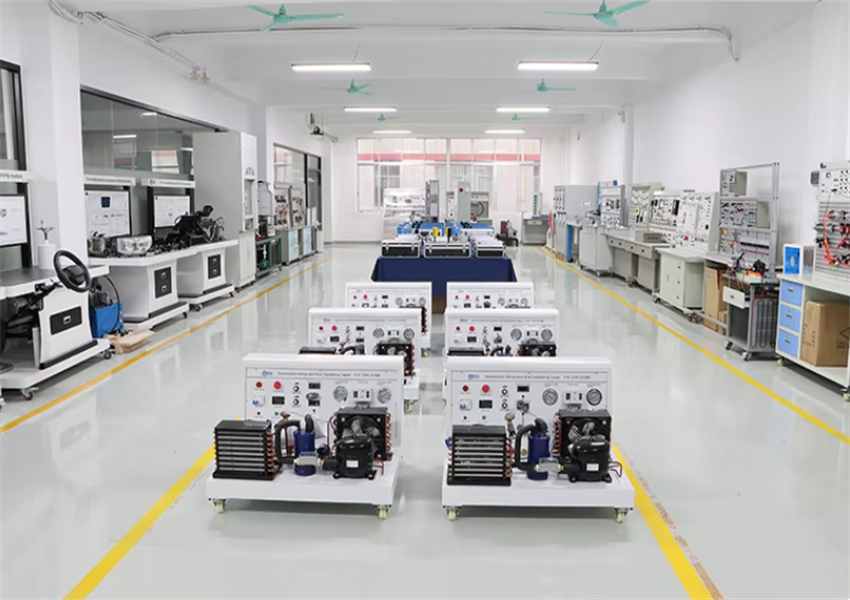
For a multiple-unit project, consistency should be built into production rather than corrected after the equipment is completed. HS uses the confirmed configuration as the production reference and controls the components, assembly details, connections, interfaces, and specified training functions that determine the final equipment result.
Quality Control Starts Before Small Errors Move Forward
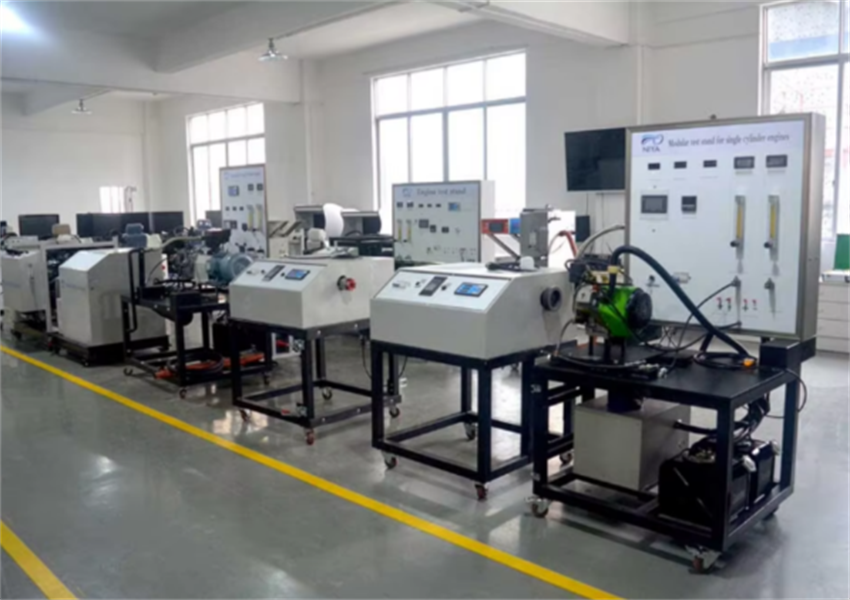
HS focuses quality checks at production points where an error can affect subsequent assembly or system integration. Component condition, assembly accuracy, electrical connections, interfaces, and configuration-related details are checked according to the equipment requirements before the issue becomes part of a completed unit.
Controlling What Cannot Be Judged by Appearance Alone
A training unit may look complete while still having a connection, interface, component, or functional difference that affects its actual use. HS combines physical inspection with applicable functional checks where the quality of a production detail cannot be confirmed by appearance alone.
When a Deviation Is Found, It Does Not Simply Pass to the Next Stage
If a production issue is identified, HS considers its potential effect on the current unit, other units, and subsequent assembly before proceeding. This is particularly important when the issue involves a shared component, wiring method, interface, or production arrangement that could affect more than one unit.
Quality Is Confirmed Again at the Complete-Equipment Stage
Process-level checks reduce the chance of defects being carried forward, but they do not replace final equipment testing. After assembly, the complete training unit is checked against its confirmed configuration and applicable functions to identify issues that only become visible after integration.
Pre-Shipment Assembly & Functional Testing
From Components to the Complete Training System
The final condition is considered at system level rather than by checking parts in isolation. This helps identify issues that only appear after electrical, mechanical, control, diagnostic, or other configured elements are integrated.
Basic Operation Does Not Prove Training Function
A unit may power on and operate normally while a measurement point, diagnostic interface, fault simulation function, control response, or other configured training feature does not perform as intended. Where applicable, HS checks these functions according to the actual equipment configuration.
Final Condition Before Shipment
Before shipment, HS confirms that the completed equipment corresponds to the approved configuration and that the applicable functional checks have been completed.
Approved Configuration → Completed Equipment → Functional Check → Shipment.
Pre-Shipment Preparation
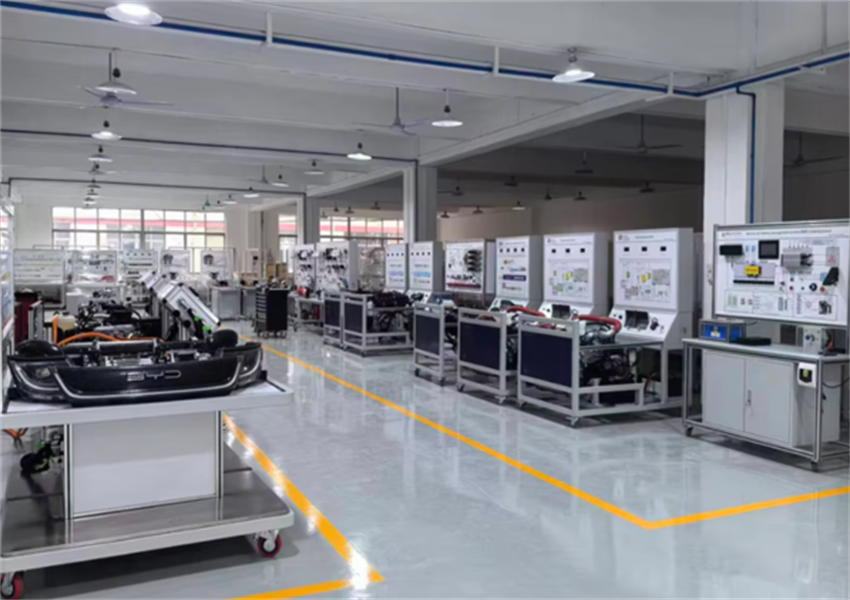
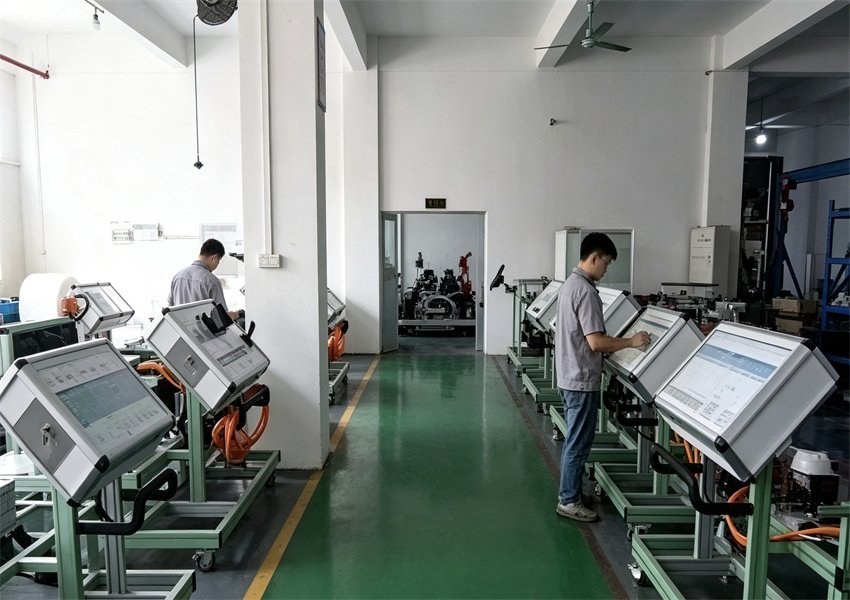
After final assembly and functional testing, the equipment enters the pre-shipment preparation stage. HS confirms that the completed equipment is ready to leave production according to the confirmed configuration and project requirements.
Confirming the Completed Equipment
The completed equipment is checked against the confirmed configuration to ensure that the required components, interfaces, accessories, and specified equipment conditions are present before the equipment proceeds to shipment preparation.
Confirming Configuration-Related Requirements
For customized or project-specific equipment, the final preparation also considers configuration details that were established during the project, including specified system arrangements, interfaces, training functions, or other confirmed requirements where applicable.
Ready for the Next Delivery Stage
Once the completed equipment has passed the required final checks and its configuration has been confirmed, it is released from the manufacturing stage for subsequent shipment arrangements.
FAQ About Automotive Training Equipment Manufacturing & Mass Production
1.How does HS keep different production batches consistent?
For projects produced in stages, HS uses the confirmed configuration as the reference for the equipment being manufactured. Particular attention is given to components, connections, interfaces, and specified training functions that could otherwise change between production batches.
2. What happens if a component becomes unavailable during production?
A replacement is not treated as a simple purchasing substitution when the component affects installation, connection, system integration, or training functions. HS considers the potential effect of the replacement before determining whether the change is suitable for the confirmed configuration.
3. How does HS assess whether a component substitution affects the training configuration?
HS considers more than the basic specification of the replacement component. Depending on the equipment, the assessment may include physical fit, electrical connections, interface compatibility, system behavior, measurement access, and the specified training function.
4.How are differences between prototype and production units controlled?
A prototype may prove that a solution works, but production introduces additional opportunities for small changes in components, structure, connections, or implementation. HS compares production requirements with the confirmed configuration so that the transition from engineering sample to production equipment does not unintentionally change the intended training result.
5.What should customers check when receiving multiple training units?
For multiple-unit projects, customers may compare not only appearance, but also key components, connection arrangements, interfaces, accessories, and specified training functions across units. This is particularly useful when the equipment will be used simultaneously in the same training program.
6.Can the configuration still be changed after production has started?
Changes after production has started depend on the production stage and the nature of the requested change. A change affecting components, structure, electrical connections, interfaces, or training functions may require its impact on completed or in-production units to be assessed before implementation.
Discuss Your Manufacturing & Mass Production Requirements
Have a confirmed automotive training equipment configuration that needs to be manufactured in multiple units or produced to project-specific requirements?
Share your equipment configuration, quantity, technical requirements, and delivery requirements with HS. We can assess the manufacturing requirements and confirm the appropriate production and delivery arrangement.