Electric Vehicle Power Chassis Fault Diagnosis Training System
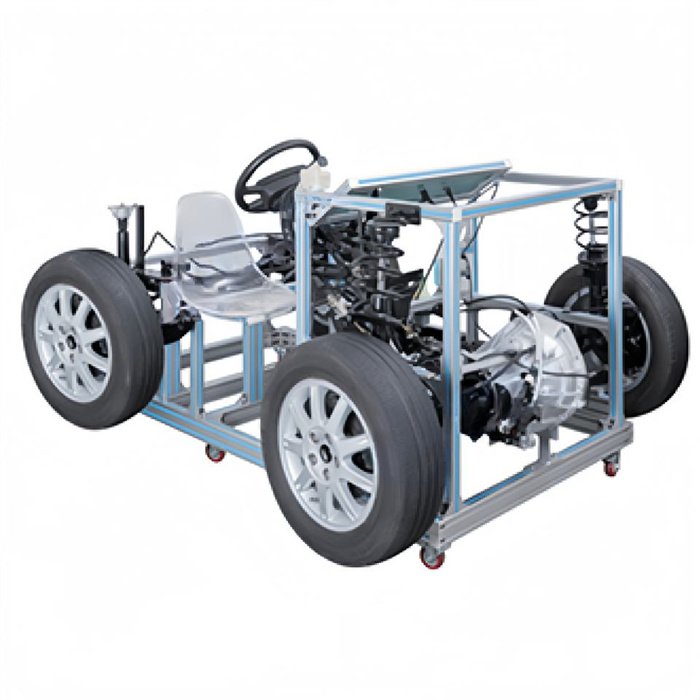
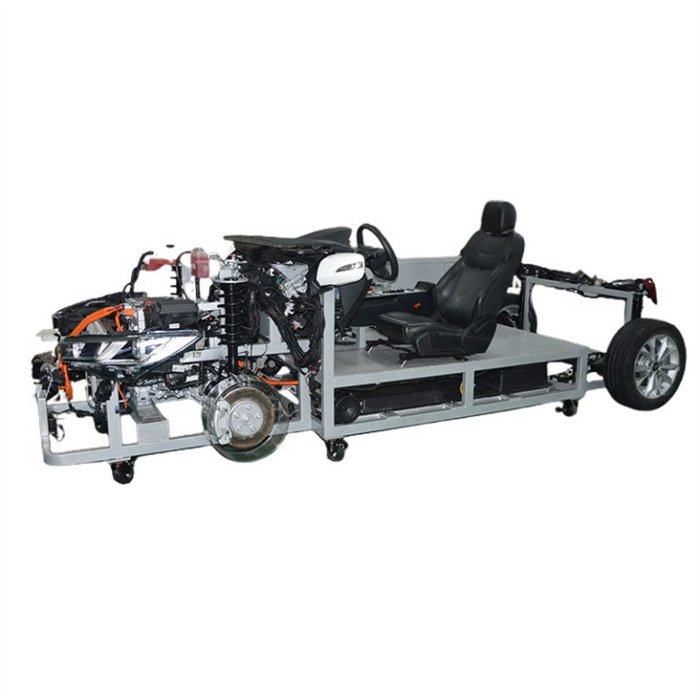
The Electric Vehicle Power Chassis Fault Diagnosis Training System is built around a pure electric vehicle chassis assembly for hands-on training in EV chassis structure, system operation, disassembly, maintenance and fault diagnosis. It combines complete chassis components, dynamic operation, color-coded moving parts and configurable fault simulation to give trainees a practical environment for understanding how EV power and chassis systems work together.
Reference Price: US$19,715–29,999 / set
Electric Vehicle Power Chassis System Configuration
The system integrates the main vehicle systems needed for EV power chassis training. The exact component combination can be selected according to the vehicle platform and training requirements.
Main system configuration may include:
- Steering System — for structure, operation and maintenance training
- Braking System — for understanding braking components and system operation
- Axle & Wheel System — for chassis structure and mechanical training
- Electric Motor & Drive System — for studying electric drive operation
- Motor Control System — for understanding drive control and related signals
- Battery System — with optional BYD or BAIC battery system configurations
- Electrical & Instrumentation System — for vehicle electrical and operating-state training
- Air-Conditioning System — where included in the selected configuration
- Driver & Vehicle Interface — for demonstrating the relationship between vehicle controls and system operation
Actual configuration depends on the selected vehicle platform, components and training requirements.
Electric Vehicle Power Chassis Fault Diagnosis Training Functions
The training functions are built around a complete pure electric vehicle chassis, combining chassis structure study, dynamic operation, hands-on maintenance, electrical measurement and controlled fault diagnosis.
1. Chassis Structure & System Operation
Trainees study the structure, component relationships and operating principles of the steering, braking, axle and wheel, electric motor drive, motor control and battery systems within an integrated EV chassis.
2. Disassembly, Assembly & Maintenance
The chassis assembly supports hands-on training in component identification, disassembly, assembly, inspection and maintenance.
3. Electrical Measurement & Circuit Inspection
Where configured, designated test points and electrical interfaces support voltage, resistance, continuity and signal-related measurements for circuit inspection and system condition analysis.
4. Fault Simulation
Configured faults can be introduced into specified electrical, control or related system circuits to create controlled troubleshooting exercises.
5. Fault Diagnosis
The system supports practical diagnosis involving fault symptom identification, system analysis, electrical measurement, fault isolation, cause determination and diagnosis verification.
6. Diagnostic Interface Training
Where specified, OBD, CAN, scanner connections or other diagnostic interfaces can be integrated to support diagnostic data access and troubleshooting.
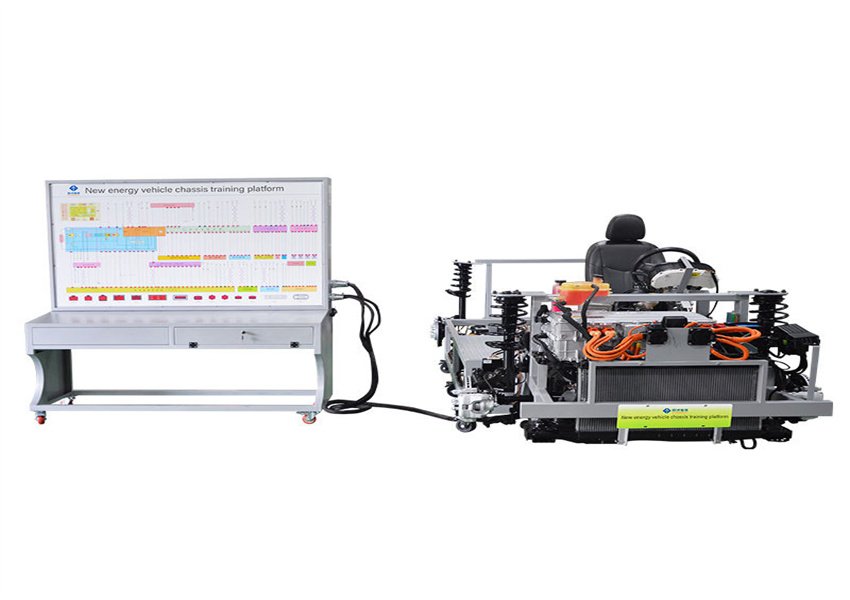
From Fault Symptom to Diagnosis: Practical Training Workflow
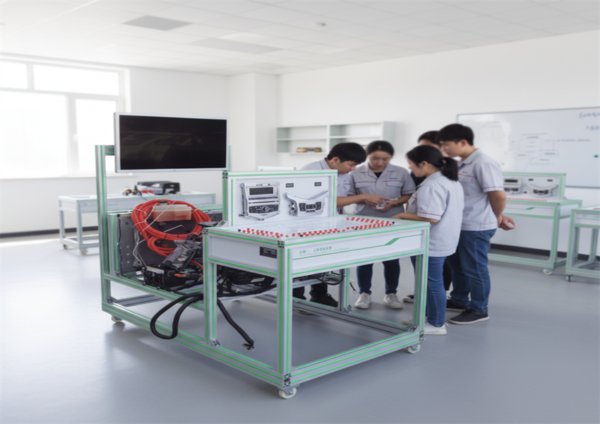
The system allows practical training to follow a structured diagnostic process rather than simply displaying a fault.
1. Identify the Fault Symptom
Observe the abnormal system condition and identify the relevant vehicle system.
2. Understand the System
Review the relevant components, circuit or control relationship before testing.
3. Select Test Points or Diagnostic Interfaces
Choose the appropriate measurement point or diagnostic interface according to the suspected fault.
4. Measure & Analyze
Perform the required measurements and compare the results with the expected operating condition.
5. Locate the Fault
Use the measurement results and system logic to narrow down the fault location.
6. Verify the Diagnosis
After the relevant repair, adjustment or fault recovery, test the system again to confirm the diagnosis.
How to Choose the Right Electric Vehicle Power Chassis Fault Diagnosis Training System?
1. Match Systems to Curriculum
Define the required focus—chassis structure, maintenance, electrical measurement, fault diagnosis, or a combination. Select multi-system or specialized configurations accordingly.
2. Match Trainer to Hands-On Tasks
Clarify whether training requires demonstration, disassembly, inspection, measurement, adjustment, maintenance, or troubleshooting. Choose dynamic operation where motion observation is required.
3. Set Measurement & Diagnostic Level
Basic training may require component access, while advanced training may require test points, sensors, electrical interfaces, fault simulation, OBD, CAN, or scanner connections.
4. Consider Student Level & Training Intensity
Entry-level training benefits from accessible structures; advanced training requires sufficient space for inspection, adjustment, and measurement. Select a structure suitable for repeated student use.
5. Check Space, Structure & Safety
Confirm dimensions, working height, access space, power requirements, moving parts, frame stability, mounting, and caster capacity against the laboratory environment.
6. Evaluate Complete Supply & Long-Term Value
Confirm the required battery platform, including BYD or BAIC configurations where applicable, as well as components, accessories, manuals, diagnostic tools, warranty, spare parts, installation, and support.
The right configuration should match the curriculum, required practical functions, laboratory conditions, and long-term training needs.
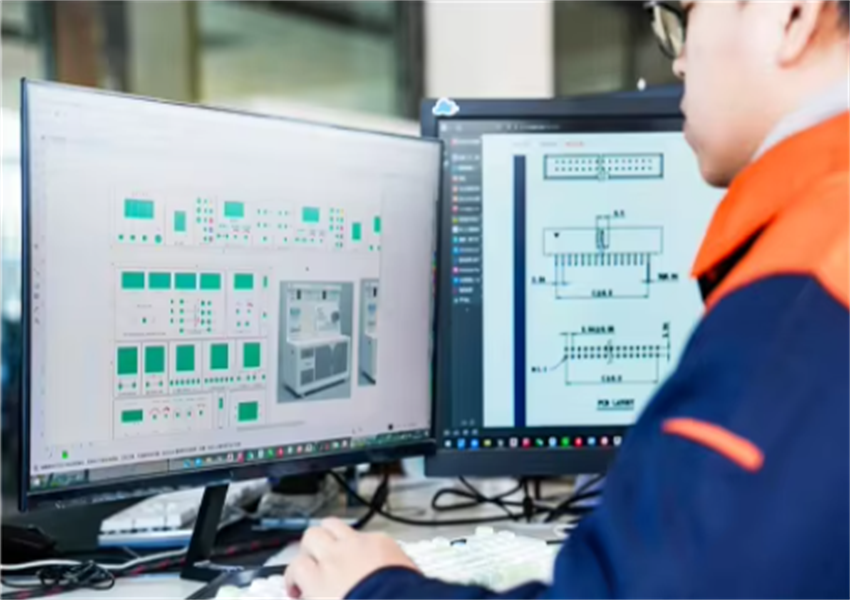
Custom Electric Vehicle Power Chassis Fault Diagnosis Training System
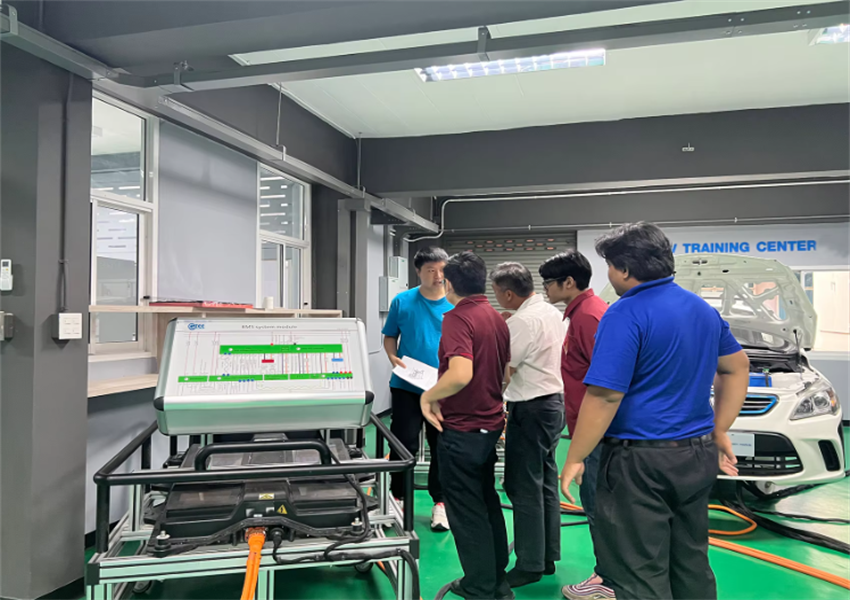
HS provides Custom Training Equipment for projects requiring a specified vehicle platform, system combination or diagnostic training scope.
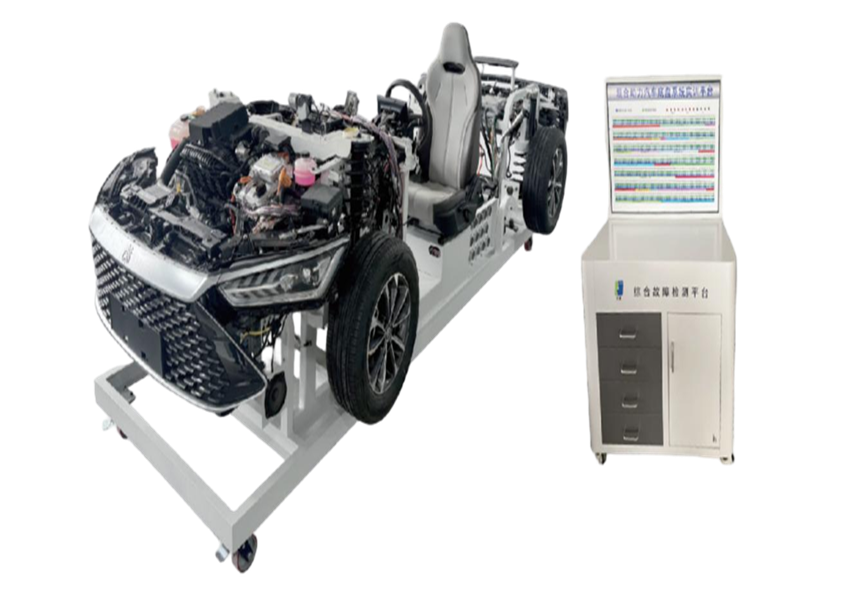
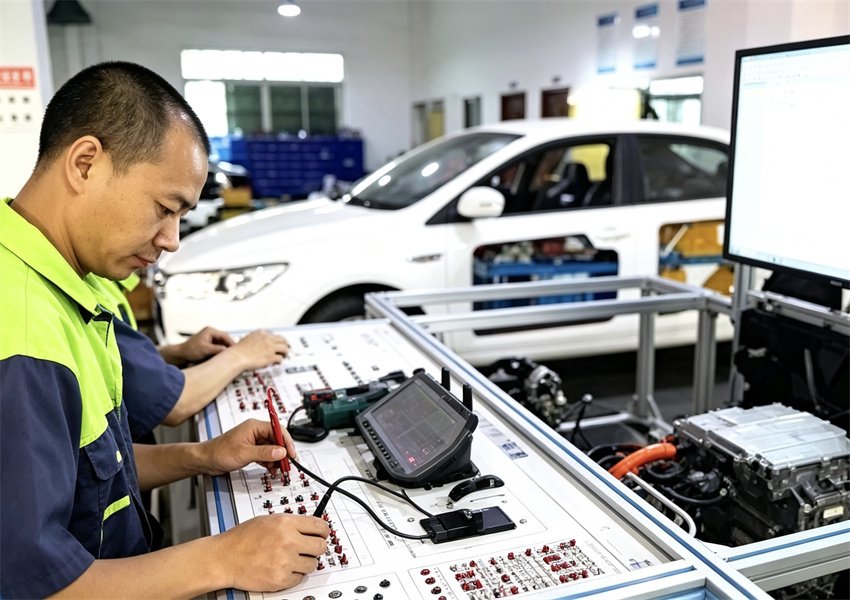
System & Component Configuration
Specify required chassis, power, electrical and control systems.
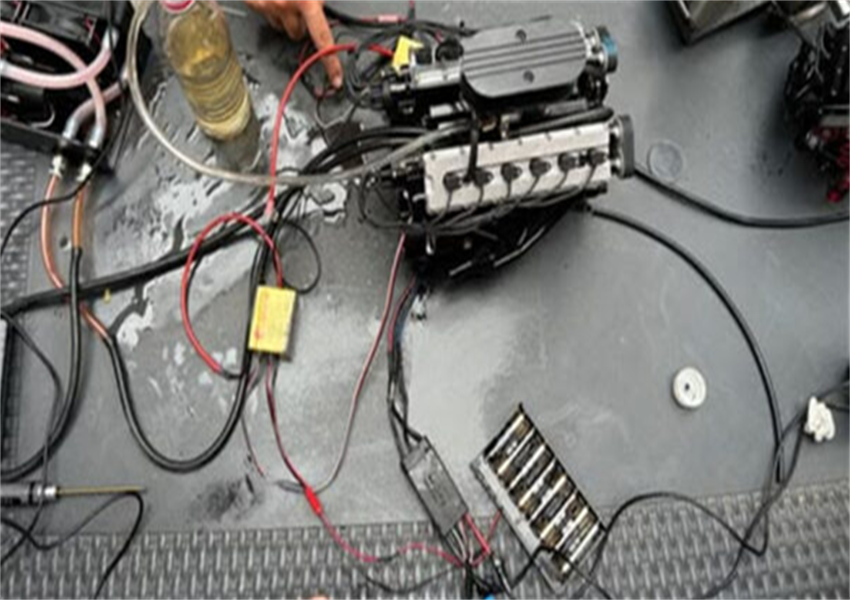
Fault Diagnosis Functions
Define required fault simulation and diagnostic training functions.
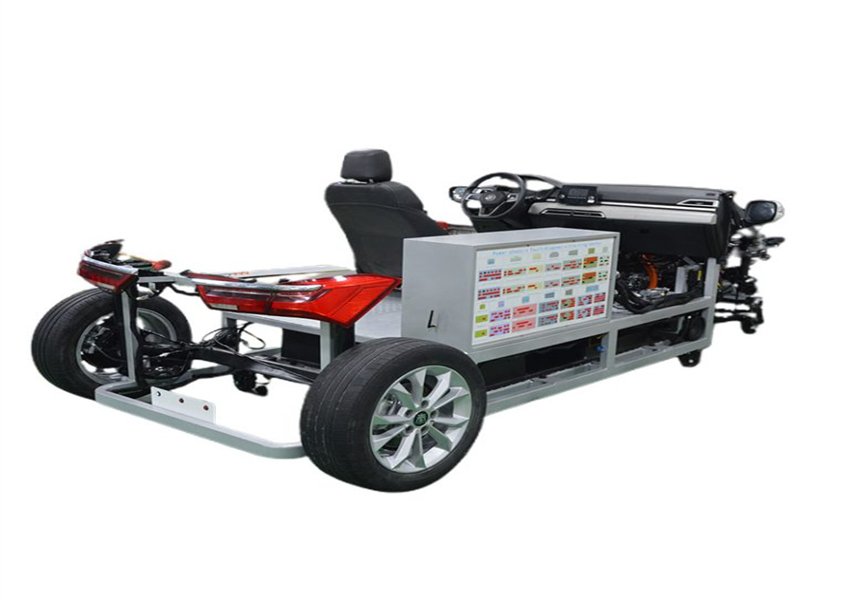
Electrical & Diagnostic Interfaces
Configure test points, OBD, CAN, scanner connections or other specified interfaces.
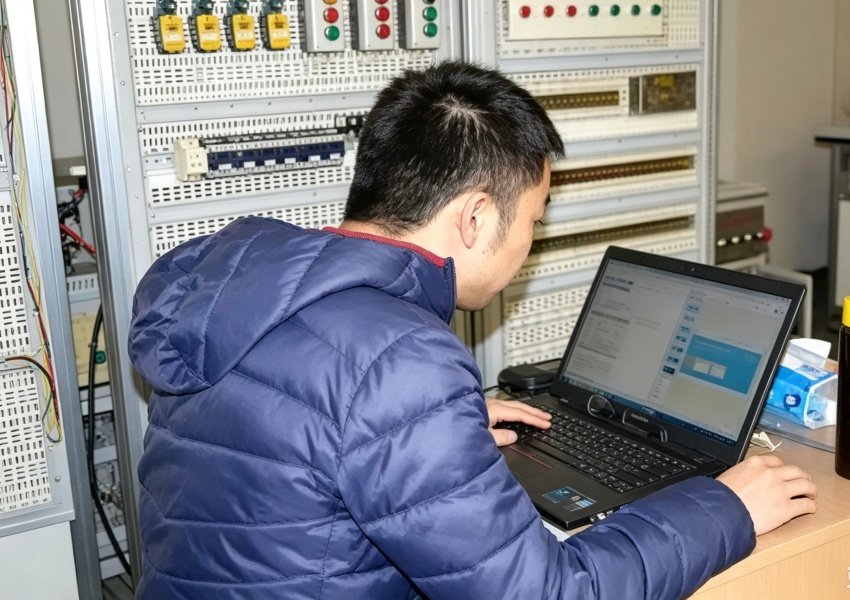
Trainer Structure & Layout
Adjust frame structure, component arrangement, operating access and laboratory layout requirements.
OEM/ODM Project Implementation
HS can support OEM/ODM projects from technical review and configuration confirmation through production and project delivery.
Branding & Documentation
Provide specified branding, training materials and project documentation where required.
Electric Vehicle Power Chassis Fault Diagnosis Training System Manufacturing Process
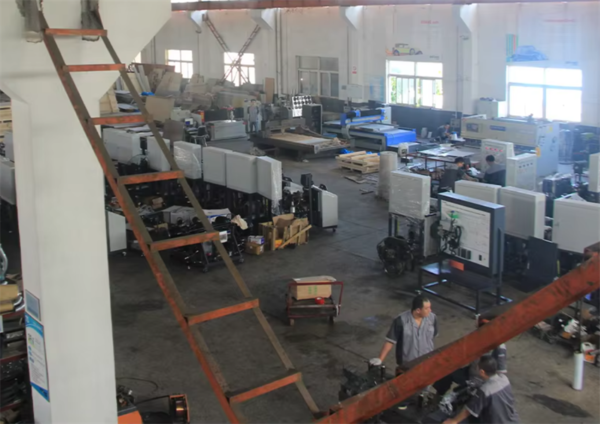
HS manufactures each Electric Vehicle Power Chassis Fault Diagnosis Training System according to the approved configuration and technical specifications.
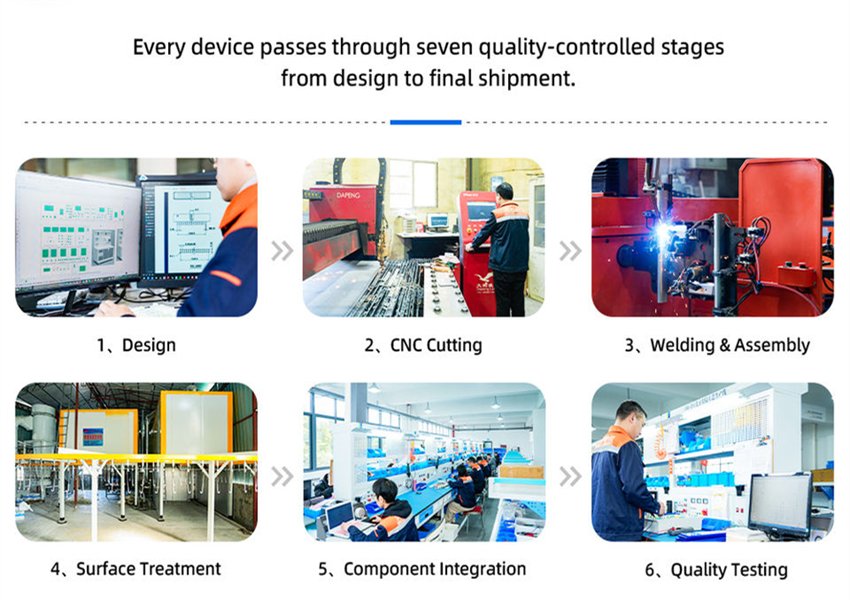
1. Technical Review & Configuration Confirmation
Confirm the vehicle chassis systems, battery configuration, training functions, diagnostic interfaces, dimensions, and project specifications.
2. Engineering Design & Layout
Design the frame structure, component layout, electrical routing, control interfaces, and training access points according to the approved configuration.
3. Frame Fabrication & Component Preparation
Cut, weld, and finish the steel frame, while preparing mounting points for chassis, electrical, and training components.
4. Chassis System Integration
Install and align the specified steering, braking, axle and wheel, electric motor drive, motor control, battery, and other chassis systems.
5. Electrical, Control & Diagnostic Integration
Integrate electrical circuits, control systems, sensors, test points, fault simulation functions, and diagnostic interfaces according to specification.
6. Final Assembly & Adjustment
Complete mechanical, electrical, and system connections, then adjust moving components and interfaces before factory testing.
Quality Control & Performance Testing
Each Electric Vehicle Power Chassis Fault Diagnosis Training System undergoes factory testing before shipment against the approved configuration and technical specification.
1. Structural & Assembly Verification
Check frame structure, component installation, mounting points, and mechanical connections against the approved configuration.
2. Electrical System Testing
Check specified electrical circuits, wiring, connections, test points, and related electrical functions.
3. System Function Testing
Verify the operation of configured chassis, electric drive, control, and vehicle-interface systems.
4. Fault Simulation Testing
Verify configured fault simulation functions and corresponding system responses.
5. Diagnostic Interface Testing
Where specified, check OBD, CAN, scanner connections, or other diagnostic interfaces.
6. Dynamic Performance Testing
For motorized or dynamic configurations, verify specified moving and operating functions under controlled factory conditions.
7. Final Configuration Verification
Confirm the completed system matches the approved configuration and technical specifications before shipment.
Electric Vehicle Power Chassis Fault Diagnosis Training System Price & Cost Factors, Lead Time, Shipping & Installation
Price
The Electric Vehicle Power Chassis Fault Diagnosis Training System price is approximately US$19,715–29,999/set. Final quotation depends on the selected vehicle platform, chassis systems, battery configuration, training functions, diagnostic interfaces, customization requirements, and order quantity.
Lead Time
Production is scheduled after technical requirements, equipment configuration, and customization details are confirmed. Standard configurations: approximately 20–25 working days. Custom configurations: final lead time is confirmed after technical review and design approval; typically 30–45 working days depending on system configuration and project complexity.
Pre-Shipment Inspection
Before shipment, each training system undergoes factory pre-assembly and complete functional testing to verify the confirmed configuration, system connections, diagnostic functions, and specified training functions.
Shipping & Delivery
Standard delivery includes export-grade wooden crate packaging suitable for international transportation. Shipping time is approximately 10–30 days, depending on the transportation method and destination.
HS can arrange:
- Sea freight – suitable for large training systems, laboratory projects, or bulk shipments; generally the most economical option for heavier equipment but with a longer transit time.
- Air freight – suitable when faster delivery is required; shorter transit time with higher transportation costs.
- Express delivery – suitable for smaller or urgent shipments, accessories, spare parts, or related materials; door-to-door service may be available depending on the destination.
The actual shipping schedule is confirmed according to the selected transportation method and delivery destination.
Installation & Technical Support
Installation requirements depend on the selected training system configuration and laboratory conditions. HS provides operation manuals, training materials, videos, and technical support for installation, operation, and training use. For customized projects, installation requirements and the technical support scope can be confirmed before shipment. On-site installation support can be arranged upon request for large laboratory projects.
Send Your Inquiry Today
FAQ About Electric Vehicle Power Chassis Fault Diagnosis Training System
1. What is the difference between an Electric Vehicle Chassis Trainer and a Fault Diagnosis Training System?
An Electric Vehicle Chassis Trainer may focus mainly on chassis structure and system operation. This system adds configured fault simulation, electrical measurement and diagnostic practice to support a more complete troubleshooting process.
2. What types of faults can trainees diagnose with this system?
Fault types depend on the selected configuration. Configured electrical, control or related system faults can be introduced to create controlled diagnostic exercises.
3. Can trainees perform actual electrical measurements?
Yes, where configured. Designated test points and electrical interfaces can support voltage, resistance, continuity and signal-related measurements.
4. Does the system support diagnostic scanners, CAN or OBD?
OBD, CAN, scanner connections or other diagnostic interfaces can be integrated where specified in the selected configuration.
5. Can trainees perform chassis disassembly and maintenance?
Yes. The integrated chassis supports specified component identification, disassembly, assembly, inspection and maintenance tasks.
6. Are BYD and BAIC battery systems available?
Yes. BYD and BAIC battery system configurations can be provided according to the selected vehicle platform and project requirements.
7. Can the system be configured for different training levels?
Yes. Chassis systems, battery configuration, training functions, diagnostic interfaces and practical tasks can be selected according to the curriculum and training level.
8. Can HS customize the system for a specific vehicle platform or laboratory project?
Yes. HS provides Custom Training Equipment and can adapt the system configuration, battery system, diagnostic functions, interfaces, structure and documentation according to project requirements.
Related Automotive Training Equipment
An Automotive Chassis Trainer is often more effective when combined with other automotive training equipment. Schools can build a progressive training laboratory instead of relying on one platform for every subject.