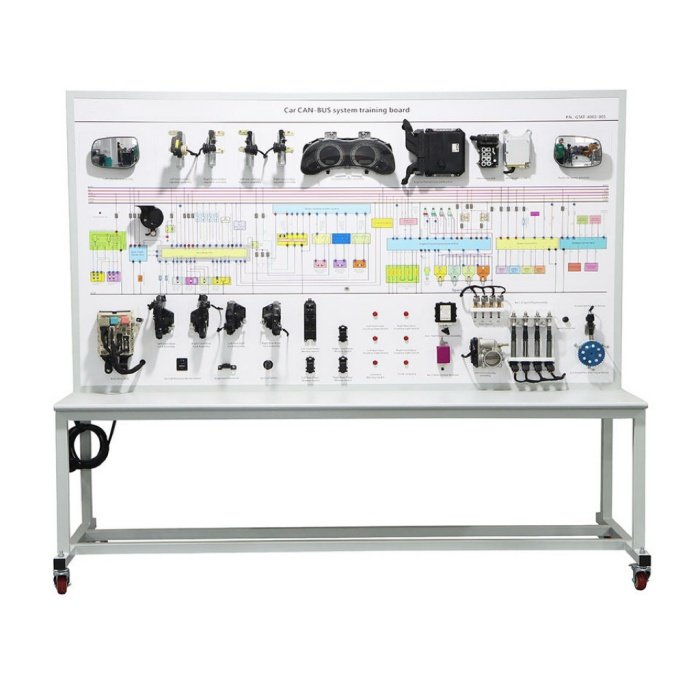
Can Bus Trainer
The Can Bus Trainer is designed to demonstrate the structure and operating principles of an automotive CAN-BUS network. It allows students to observe CAN network data transmission and understand how multiple vehicle systems are connected through the network. The training board integrates relevant parts of the engine control system, comfort system, central locking system, instrument system, anti-theft system, transmission control system, and power window system, with training functions for fault setting and fault troubleshooting.
Price: Approximately US$4,000–10,000 / set
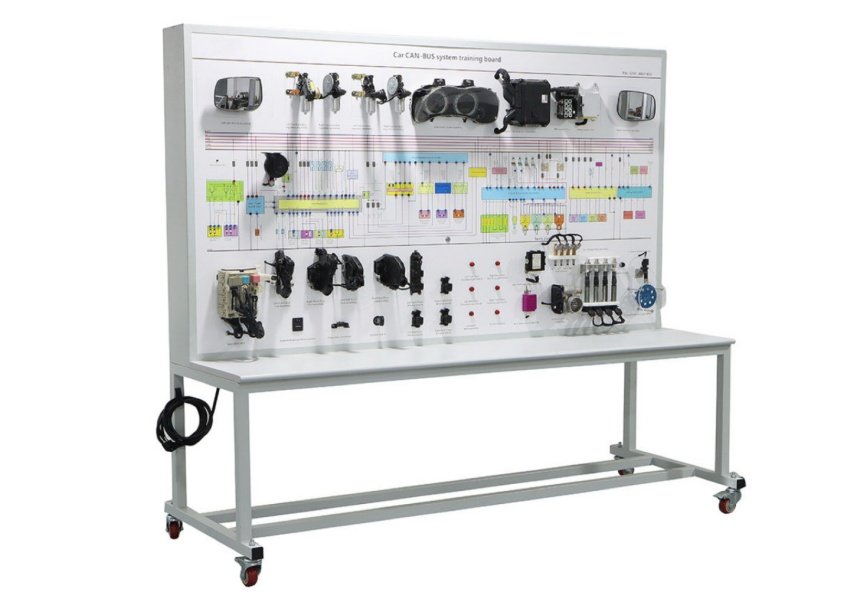
Can Bus Trainer Systems & Training Functions
The trainer combines CAN-BUS network training with practical study of the vehicle systems connected through the network. Students can work with the represented systems to understand network structure, operating processes, data transmission, system relationships, and fault troubleshooting.
1. CAN-BUS Network Structure & System Connections: Students study how the represented vehicle systems are connected within the CAN-BUS network and understand the relationship between individual control systems and the overall network.
2. CAN-BUS Operation & Data Transmission: The trainer demonstrates CAN-BUS operation and data transmission between connected vehicle systems, helping students understand how network communication supports vehicle functions.
3. Vehicle System Integration Training: The training board represents relevant parts of the engine control, comfort, central locking, instrument, anti-theft, transmission control, and power window systems. Students can study these systems as connected parts of the vehicle network rather than as isolated functions.
4. Fault Setting & Troubleshooting Training: Students can work with defined fault conditions and analyze the affected vehicle system and its CAN-BUS relationship to identify and troubleshoot the fault.
Practical Training Workflow
1. Identify the Network and Connected Systems: Students first identify the CAN-BUS network structure and the vehicle systems represented on the training board, establishing the basic relationship between the network and its connected systems.
2. Study System Connections and Operating Relationships: Students examine how the engine control, comfort, central locking, instrument, anti-theft, transmission control, and power window systems are represented within the CAN network.
3. Observe CAN-BUS Operation and Data Transmission: The trainer is used to demonstrate CAN-BUS operation and data transmission, allowing students to connect network communication with the operation of the represented vehicle systems.
4. Introduce a Defined Fault Condition: A fault condition can be introduced through the trainer’s fault-setting function for troubleshooting exercises.
5. Analyze the Fault and Troubleshoot: Students analyze the affected vehicle system and its relationship with the CAN-BUS network, then work through the troubleshooting task to identify and resolve the fault.
6. Verify the Troubleshooting Result: Students review the system operation after troubleshooting and confirm whether the training task has been completed as intended.
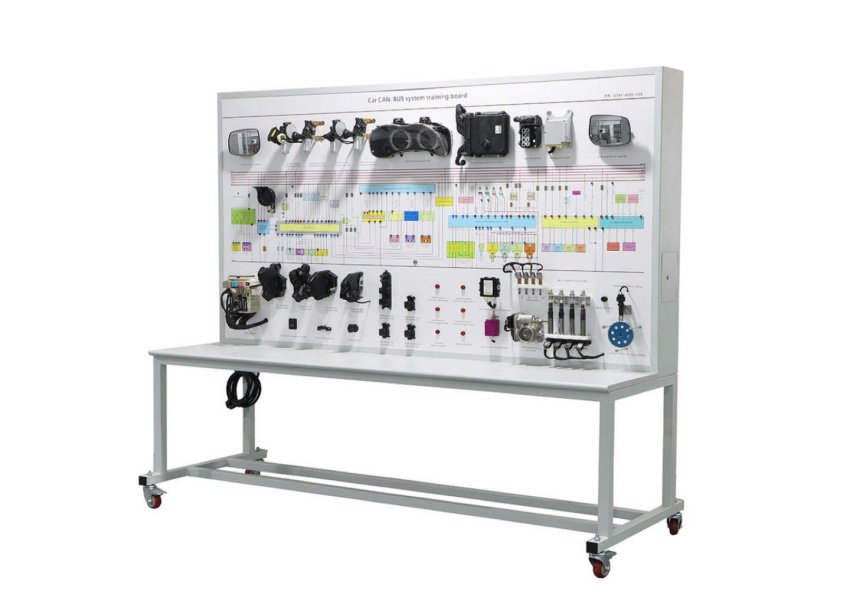
Custom Can Bus Trainer
When the standard configuration does not fully match a training program, customization can focus on the CAN network scope and the vehicle system relationships that need to be represented and trained.
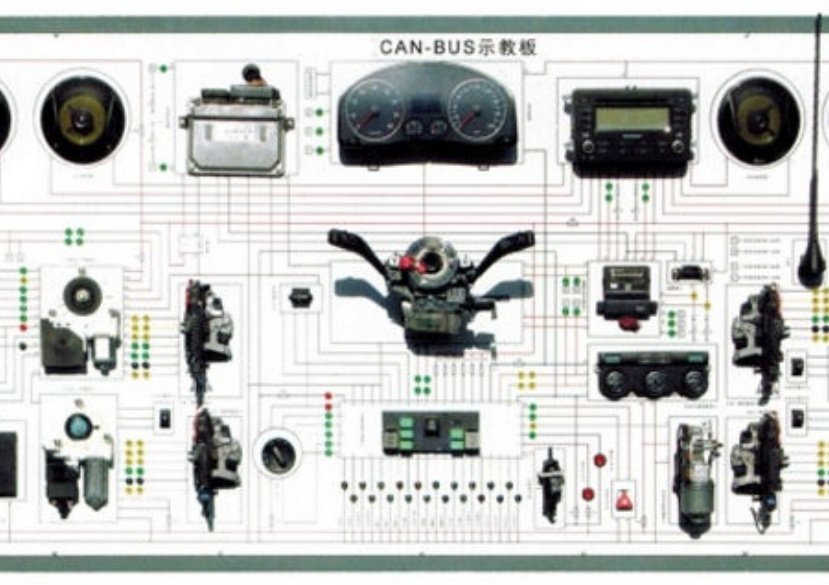
CAN Network Training Scope
The required network scope can be defined according to the vehicle systems and CAN communication relationships that students need to study.
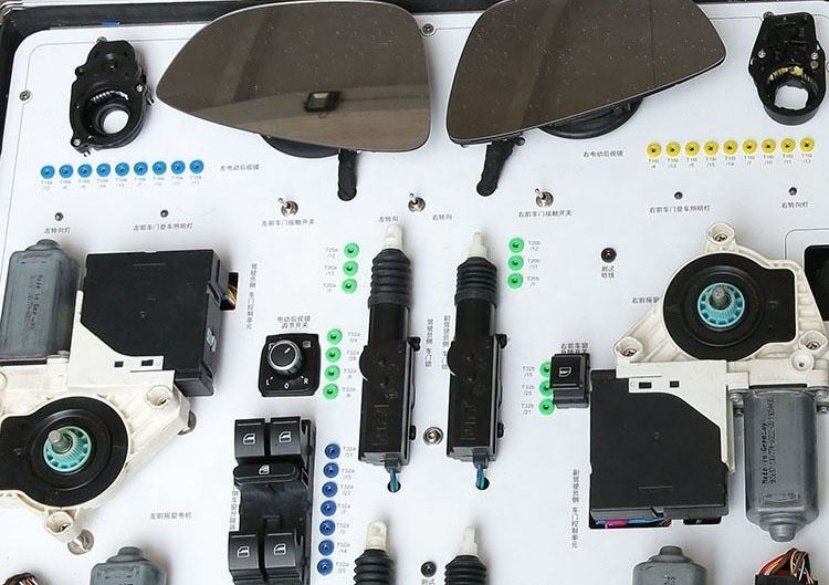
Connected Vehicle System Configuration
The combination of represented vehicle systems can be confirmed according to the intended training tasks, such as focusing on specific relationships between control systems and vehicle functions.
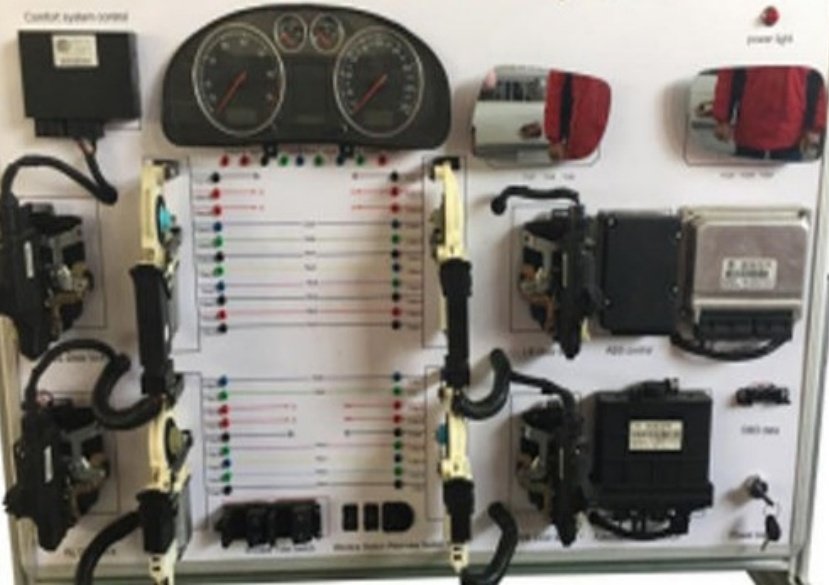
Fault Training Scope
Where fault-setting and troubleshooting are required, the intended fault-training scope can be defined according to the systems and training tasks covered by the program.
Can Bus Trainer Price, Lead Time, Shipping & Installation
Price
The Can Bus Trainer is approximately US$4,000–10,000 / set.
The final quotation depends on the selected configuration and customization requirements.
Lead Time
Standard: 20–25 working days
Custom: 30–45 working days
Lead time applies after the requirements, configuration, and order details are confirmed.
Pre-Shipment Inspection
Before shipment, the trainer is pre-assembled and functionally tested against the approved configuration and technical specification.
The inspection covers the configured vehicle systems, CAN-BUS network connections, training functions, fault-training functions where applicable, and overall operation.
Shipping & Delivery
Overall shipping time is usually about 20–45 days, depending on the destination, shipping route, and shipping method.
The suitable shipping method can be determined according to the destination and delivery requirements.
Installation & Technical Support
HS can provide installation guidance, manuals, videos, and technical assistance for equipment setup and use. Technician guidance can also be provided where applicable.
Send Your Inquiry Today
FAQ About Can Bus Trainer
1. How should this trainer be positioned within an automotive electrical training program?
The trainer can serve as a practical platform for connecting CAN-BUS network concepts with vehicle system operation and troubleshooting. It is particularly relevant when a training program needs students to move beyond learning individual electrical systems and understand how multiple systems interact through an in-vehicle network.
2. Should the training scope be defined by vehicle systems or by CAN-BUS topics?
Both need to be considered together. Defining only the CAN-BUS topics may result in a network-focused configuration without enough connection to the actual training tasks, while selecting systems without defining the network relationships may not clearly establish what students are expected to learn from the equipment.
3. How should fault training be planned for this type of equipment?
Fault training should be linked to the systems and CAN-BUS relationships covered by the training program rather than treated as a separate function added after the equipment configuration is completed. Before ordering, it is useful to define which systems students need to analyze and what level of troubleshooting the course expects.
4. What should be confirmed if the trainer will be shared across different courses?
The key issue is whether the represented system combination can support the training tasks across those courses. If one course focuses on CAN-BUS fundamentals while another emphasizes vehicle-system troubleshooting, the required system scope and fault-training requirements should be reviewed together before the configuration is finalized.
5. What information is useful when asking HS to recommend a configuration?
The most useful information is not simply a product name, but the training tasks the equipment needs to support. Providing the systems covered by the course, the CAN-BUS topics to be demonstrated, the required troubleshooting scope, and whether the equipment will be used across multiple courses gives HS a clearer basis for matching the configuration to the training requirements.
6.When is a custom configuration worth considering instead of the standard configuration?
A custom configuration may be relevant when the training program has a specific combination of vehicle systems, network relationships, or troubleshooting requirements that are not fully covered by the standard configuration. The decision should be based on the actual training tasks that need to be supported rather than customization for its own sake.
Related Automotive Training Equipment
Request a Can Bus Trainer Quote
Have a training requirement but not sure what equipment configuration you need? Talk to HS.