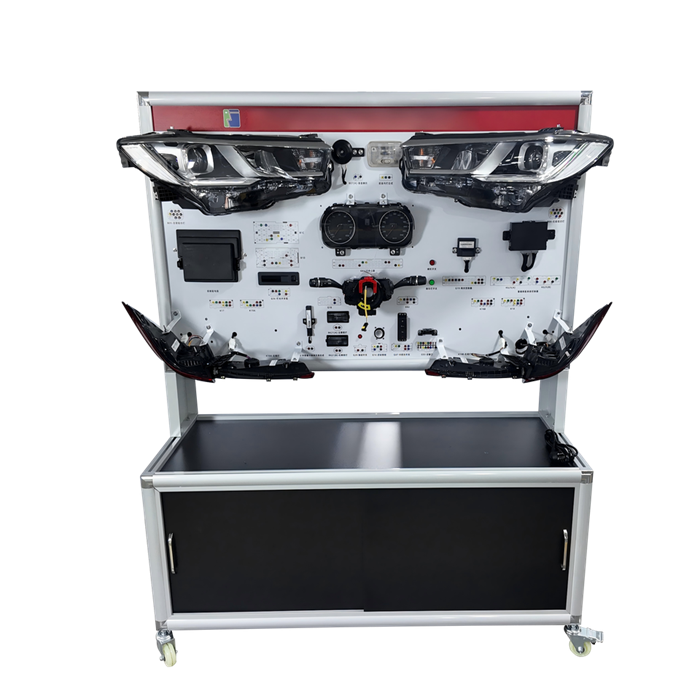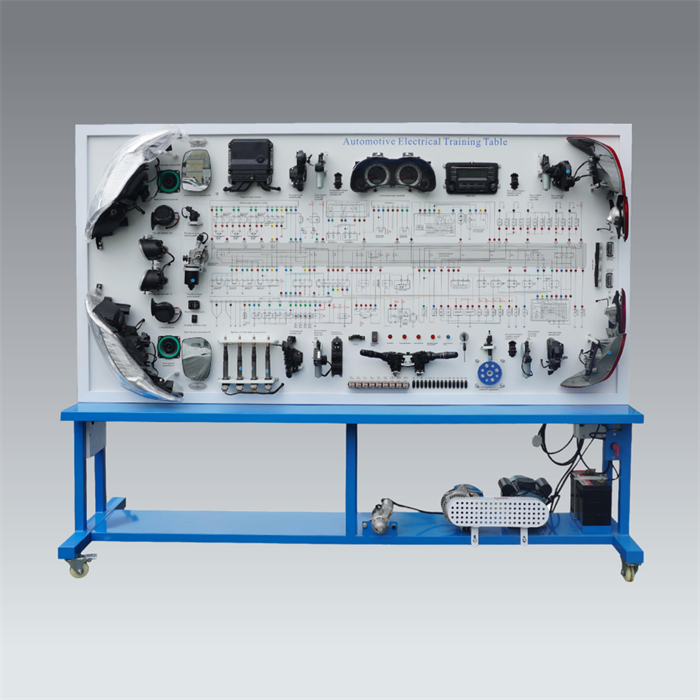
Gasoline Engine Electric Control System Training Board
The Gasoline Engine Electric Control System Training Board is designed for practical training in gasoline engine electronic control systems, including control circuits, sensors, actuators, ECU-related functions, electrical measurement, and fault diagnosis. Its board-based layout provides accessible system components and test points for studying how engine electrical signals are generated, transmitted, monitored, and controlled.
Price: approximately US$2,780–6,950 / set
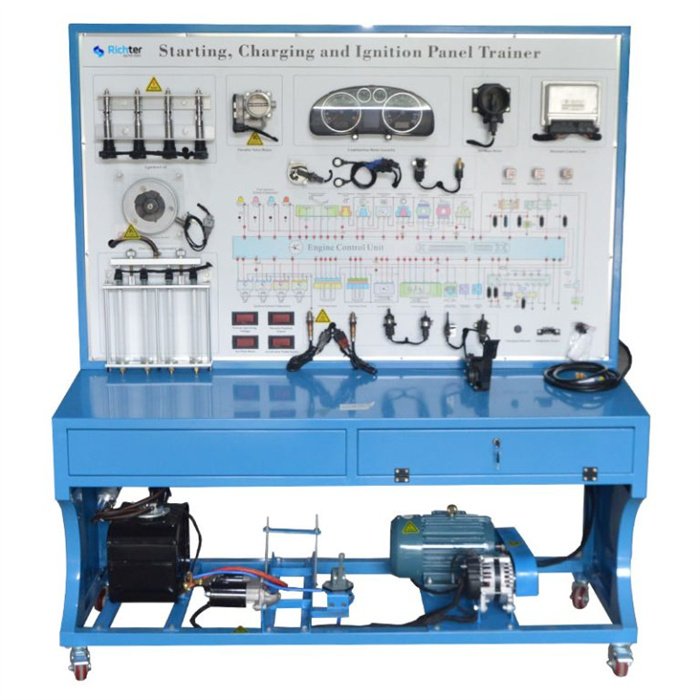
Gasoline Engine Electric Control Systems & Training Functions
The Gasoline Engine Electric Control System Training Board integrates the main engine electronic control circuits, components and test points required for practical training. Its board-mounted layout keeps the control system visible and accessible for demonstration, measurement and troubleshooting.
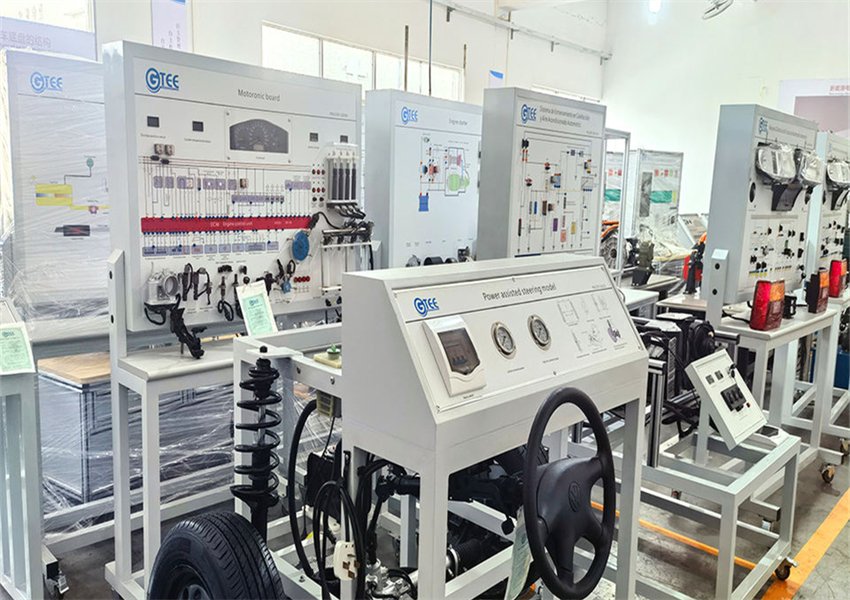
1. Engine ECU Control Circuit
Presents the main engine electronic control circuits in an accessible training layout for studying signal transmission and control relationships.
2. Engine Sensors & Control Components
Integrates the configured engine electronic control components for component identification and control-system training.
3. Electrical Test Points
Accessible test points support practical inspection and measurement of specified control circuits.
4. Circuit Diagram & Component Layout
The panel layout connects circuit diagrams with physical components, helping trainees trace and understand the control circuits.
5. System Operation Analysis
Allows trainees to study the relationship between electrical inputs, ECU control and system outputs through the visible training layout.
6. Electrical Measurement & Troubleshooting
Supports practical circuit inspection and troubleshooting according to the selected training configuration.
7. Configurable Training Functions
Additional diagnostic or fault-training functions can be included where specified in the selected configuration.
From Electrical Signal to Fault Diagnosis: Practical Training Workflow
The Gasoline Engine Electric Control System Training Board supports a structured diagnostic workflow that connects the color circuit diagram, configured engine control components, built-in test terminals, and available diagnostic interfaces. Trainees progress from abnormal condition identification to measurement, circuit analysis, fault location, and diagnosis verification.
1. Identify the Abnormal Condition
Observe the specified fault symptom or abnormal system condition and determine which engine control circuit may be involved.
2. Read the Circuit Diagram
Use the color circuit diagram on the panel to trace power, ground, signal and control paths, then match them with the corresponding physical components, connectors and circuit points.
3. Select the Test Point
Select the appropriate built-in test terminal or specified circuit point according to the suspected component or circuit, rather than relying only on visual inspection.
4. Perform Electrical Testing
Carry out the specified electrical or signal measurements through the available test terminals and record the results for further analysis. Where configured, compatible diagnostic equipment can be used through the available diagnostic interface.
5. Analyze the Circuit Condition
Compare the measured results with the expected circuit condition to determine whether the abnormality is related to power supply, grounding, sensor input, ECU control, actuator output or other configured system functions.
6. Verify the Diagnosis
Recheck the relevant circuit or system after troubleshooting to confirm the diagnosis and verify that the specified operating condition has been restored.
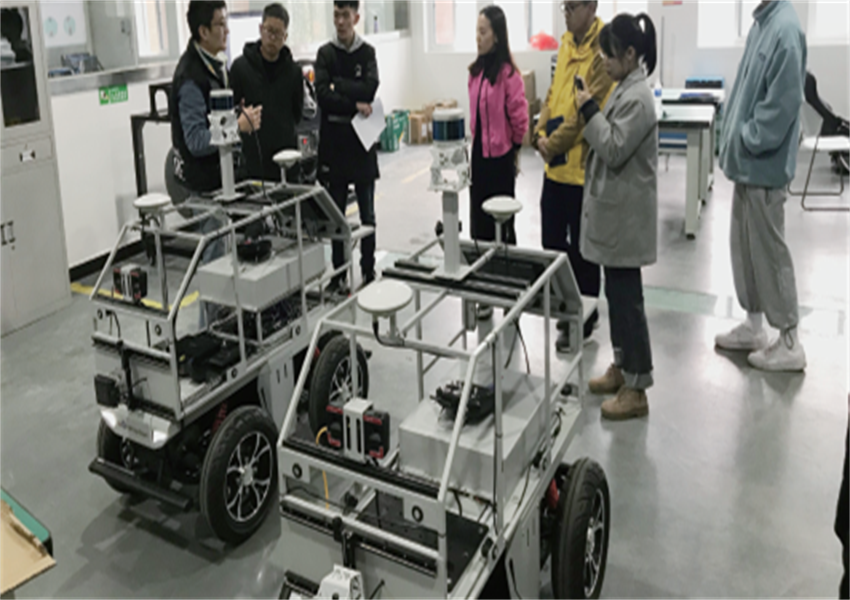
Custom Gasoline Engine Electric Control System Training Board
HS can customize the training board based on the selected engine platform, ECU, diagnostic functions, training requirements, and laboratory conditions. Specific configurations are confirmed according to project requirements.
1. Engine & ECU Platform
Specify the required engine platform and ECU configuration, including applicable engine type, displacement, control system, and ECU model or requirements where applicable.
2. Control Components & Circuits
Specify the required sensors, actuators, relays, fuses, ignition, fuel-control and other engine electronic control components. Circuit diagrams, pinouts, wiring colors, and signal paths can be configured according to the selected system.
3. Test Points & Measurement Interfaces
Specify the required test terminals, measurement locations, connector types, and panel interfaces according to the training requirements and selected electrical measurements.
4. Diagnostic Interface & Functions
Where required, configure the applicable diagnostic interface and related functions according to the selected diagnostic equipment, communication requirements, and course content. Compatible diagnostic tools and protocols can be confirmed during technical review.
5. Fault Simulation & Diagnostic Training
Where required, specify the fault-training requirements, including applicable circuit or component fault types, fault locations, recovery methods, and assessment requirements.
6. Panel & Structure
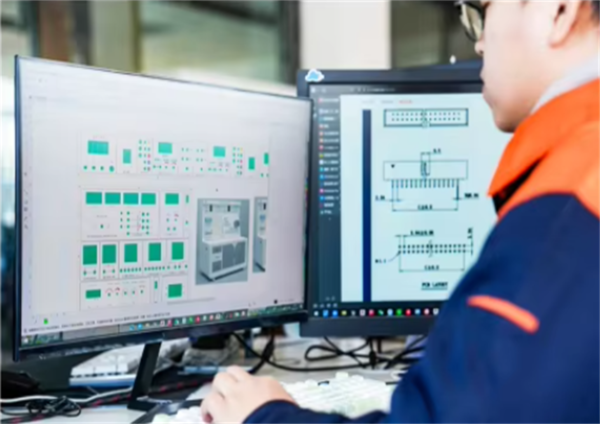
Customize the panel size, diagram language, component arrangement, test-point layout, operating area, and overall training-board structure according to the laboratory space and training workflow.
Automotive Chassis Trainer Price, Lead Time & Delivery
Price
The Gasoline Engine Electric Control System Training Board price is approximately US$2,780–6,950/set. Final quotation depends on the selected control-system configuration, components, training functions, diagnostic interfaces, customization requirements, and order quantity.
Lead Time
Production is scheduled after technical requirements, equipment configuration, and customization details are confirmed. Standard configurations: approximately 20–25 working days. Custom configurations: final lead time is confirmed after technical review and design approval; typically 30–45 working days depending on system configuration and project complexity.
Pre-Shipment Inspection
Before shipment, each training board undergoes factory pre-assembly and complete functional testing to verify the confirmed configuration, electrical connections, test points, and specified training functions.
Shipping & Delivery
Standard delivery includes export-grade wooden crate packaging suitable for international transportation. Shipping time is approximately 10–30 days, depending on the transportation method and destination.
HS can arrange Sea freight for larger equipment, laboratory projects, or bulk shipments; it is generally more economical for heavier equipment but has a longer transit time.
Air freight is suitable when faster delivery is required, offering shorter transit time with higher transportation costs.
Express delivery is suitable for smaller or urgent shipments, accessories, spare parts, or related materials; door-to-door service may be available depending on the destination.
The actual shipping schedule is confirmed according to the selected transportation method and delivery destination.
Installation & Technical Support
Installation requirements depend on the selected training board configuration and laboratory conditions. HS provides operation manuals, training materials, videos, and technical support for installation, operation, and training use. For customized projects, installation requirements and the technical support scope can be confirmed before shipment. On-site installation support can be arranged upon request for larger laboratory projects.
Send Your Inquiry Today
FAQ About Automotive Transmission Trainers
1. What is the difference between a Gasoline Engine Electric Control System Training Board and a complete Engine Trainer?
The Gasoline Engine Electric Control System Training Board focuses on the electronic control side of gasoline engines, such as control circuits, configured electronic components, electrical test points, and related diagnostic training. A complete Engine Trainer is more suitable when the curriculum also requires engine mechanical structure, operating principles, and broader maintenance training.
2. When should a training board be selected instead of a complete engine trainer?
A board-based system is a better fit when the main training objectives are engine electronic control, circuit analysis, electrical measurement, and troubleshooting rather than mechanical engine operation. Its panel layout also provides more direct access to the relevant circuits and test points.
3. What should buyers confirm when selecting the configuration?
Buyers should confirm the required engine control system, ECU requirements, electronic components, test points, diagnostic interfaces, fault-training functions, and panel layout. These configuration details determine whether the equipment matches the planned practical training tasks.
4. Can the training board be configured for a specific engine or ECU system?
Yes. HS can configure the training board around specified engine and ECU requirements, including applicable control components, circuit layout, test points, interfaces, and related training functions. The final configuration is confirmed during technical review.
5. What types of electrical testing can be performed?
The training board provides accessible test terminals or specified circuit points for practical inspection and measurement. The exact measurement functions depend on the selected configuration and the circuits included in the training system.
6. Can fault simulation be included for diagnostic training?
Fault simulation can be included where required. The applicable fault types, fault locations, recovery methods, and assessment functions are determined according to the selected configuration and training requirements.
7. Is the board suitable for basic and advanced engine electronics training?
Yes. The configuration can be matched to different training levels. Basic setups can focus on circuit identification, component recognition, and electrical principles, while more advanced configurations can support measurement, troubleshooting, and specified diagnostic functions.
8. What is the main advantage of a board-based engine electronic control system for training?
The main advantage is that the electronic control system is presented in a visible and accessible training layout. Circuit diagrams, components, connections, and test points can be arranged together, allowing instructors and trainees to trace circuit relationships and perform practical testing more directly than with a less accessible system layout.
Related Automotive Training Equipment
An Automotive Chassis Trainer is often more effective when combined with other automotive training equipment. Schools can build a progressive training laboratory instead of relying on one platform for every subject.