Automotive Power System Trainer
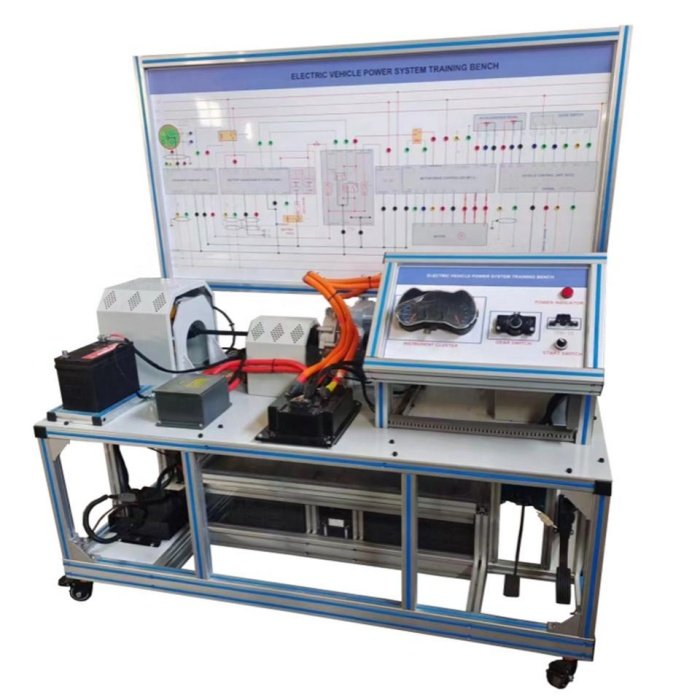
The Automotive Power System Trainer provides an integrated practical training platform for studying automotive power system structure, engine operation, power transmission, drivetrain relationships, maintenance, measurement, and troubleshooting. Instead of focusing on a single engine or transmission component, the trainer can present selected power-system components together so trainees can examine how power is generated, transferred, controlled, and delivered through the configured system.
Price: approximately US$2,000–20,000/set
Automotive Power System Trainer Systems & Training Functions
1. Engine Power System: The selected engine platform provides the power source for practical training and allows trainees to examine engine operation and its relationship with the configured drivetrain.
2. Transmission System: The trainer can incorporate a selected manual or automatic transmission system where configured, allowing trainees to study its role in transferring engine output through the drivetrain.
3. Engine-to-Transmission Power Transfer: The integrated configuration allows trainees to examine how engine output is transferred into the transmission and how changes in transmission operation affect the configured power-transfer path.
4. Drivetrain & Power Output: Where included, the trainer can demonstrate the configured drivetrain components and the relationship between transmission output and the final power-delivery mechanism.
5. Operating & Control Functions: Depending on the selected system, operating controls can be configured to allow trainees to observe or operate applicable engine, transmission, or drivetrain functions during practical training.
6. Test Points & Measurement: Where configured, accessible test points and measurement interfaces can be provided for checking selected system conditions and analyzing relationships between operating parameters.
7. Maintenance & Troubleshooting: The configured system can support practical maintenance procedures and troubleshooting tasks related to the included power-system components.
From Engine Output to Power Delivery: Practical Training Workflow
1. Identify the Configured Power System: Trainees first identify the engine, transmission, drivetrain, and other configured power-system components and establish their functional relationships.
2. Inspect System Connections: The relevant mechanical connections, operating interfaces, and accessible system connections are inspected before operation.
3. Observe Engine Power Generation: Where an operating engine is included, trainees observe engine operation and identify how engine output becomes the input for the transmission system.
4. Examine Power Transmission: Trainees operate or observe the configured transmission and trace how engine output is transferred through the transmission and drivetrain.
5. Perform Testing, Measurement or Maintenance: Where applicable, trainees perform configured measurement, inspection, maintenance, or troubleshooting tasks on selected power-system components.
6. Verify Power-System Operation: The final step is to review the system condition and verify the configured power-generation and power-transmission process after testing or maintenance.
Custom Automotive Power System Trainer
HS can customize the Automotive Power System Trainer around the required vehicle powertrain architecture and the way its mechanical power path needs to be represented for practical training. The customization focuses on reproducing the required relationship between major powertrain assemblies rather than simply selecting individual training components.
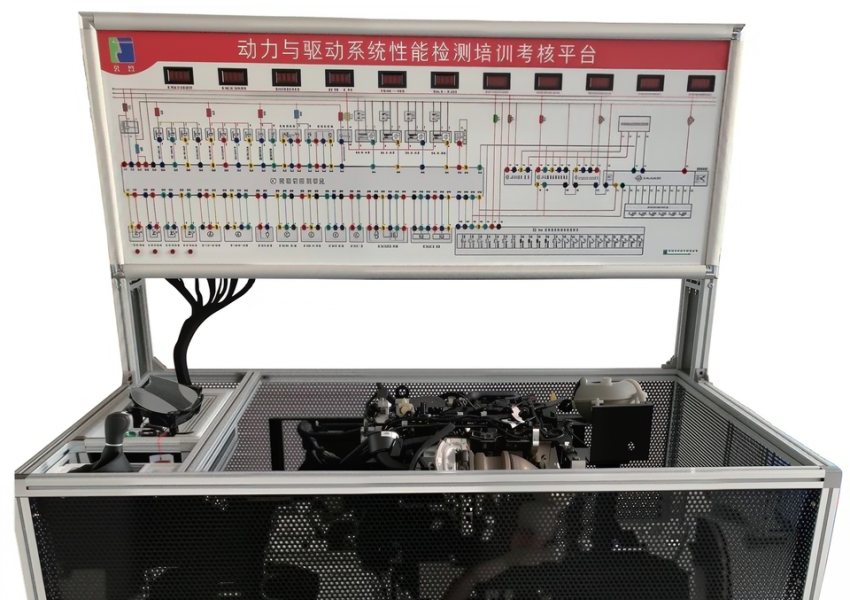
Powertrain Architecture
Define the overall powertrain architecture to be represented, including the required combination and relationship of the engine, transmission, differential, driveshaft, axle, and other applicable powertrain assemblies.
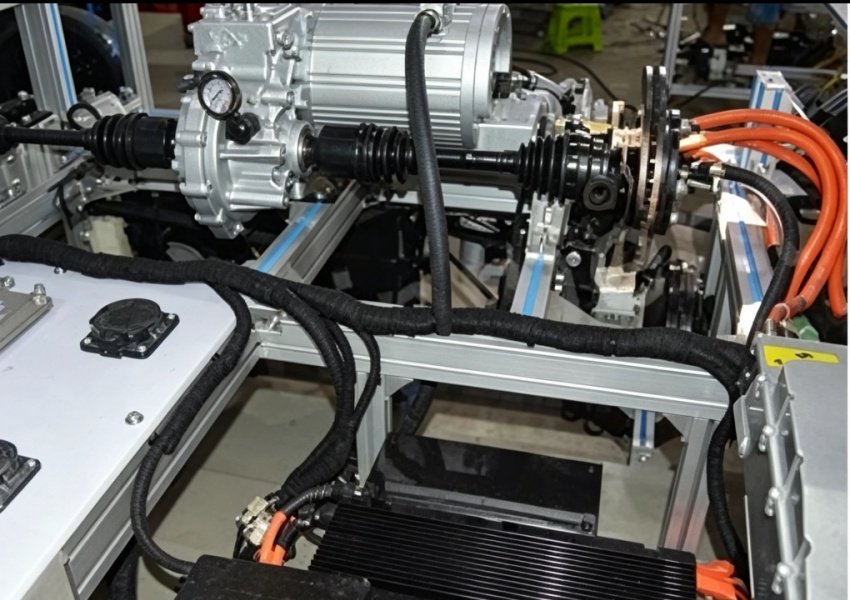
Power Transmission Chain
Specify the section of the mechanical power path that needs to be physically represented, from engine output through the transmission and drivetrain to the final applicable power-delivery point.
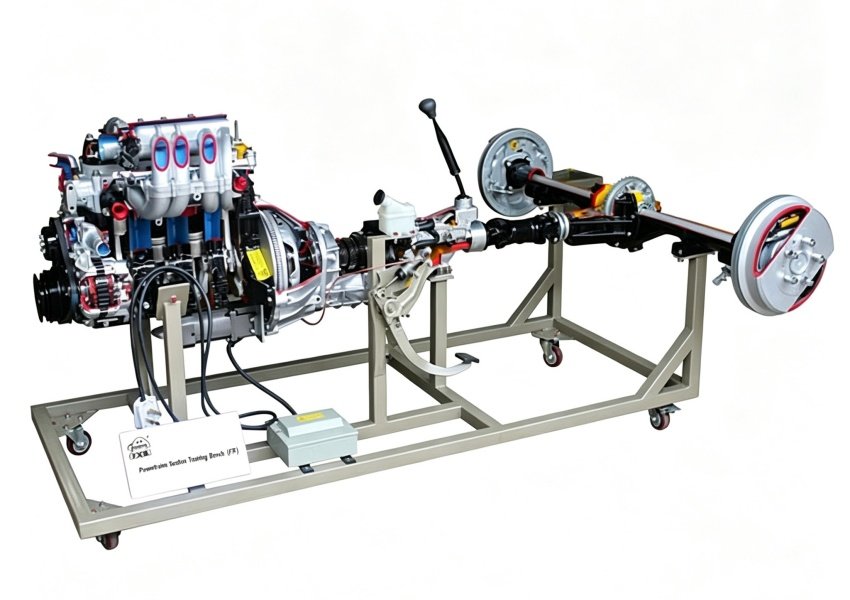
Vehicle Drive Configuration
Configure the powertrain layout according to the required vehicle drive configuration, such as the applicable front-, rear-, or other configured drivetrain arrangement.
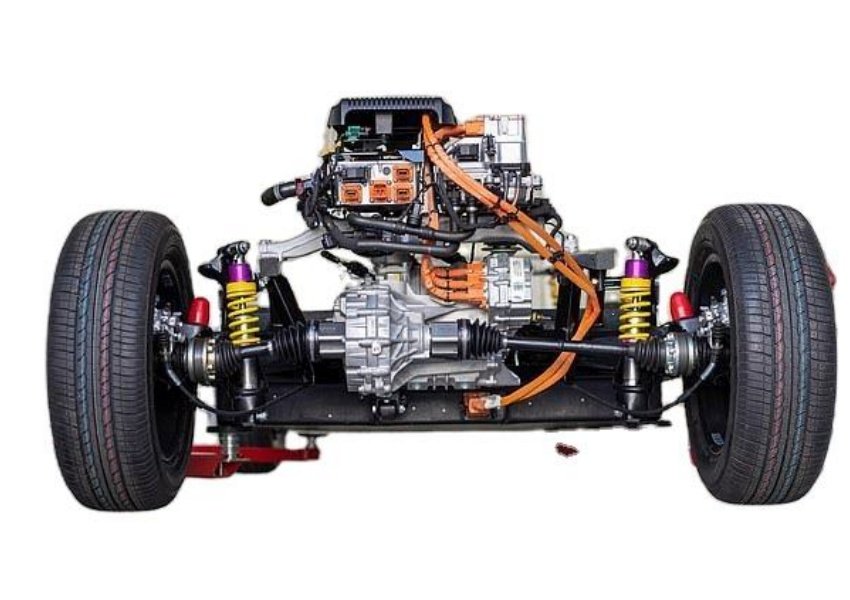
Powertrain Assembly Integration
Determine how the selected powertrain assemblies are physically integrated and arranged as one training system so that their mechanical relationships and power-transfer sequence can be observed as a complete system.
Automotive Power System Trainer Price, Lead Time, Shipping & Installation
Price
Approximately US$2,000–20,000/set.
The wide price range reflects differences in engine and transmission platforms, system integration scope, operating functions, measurement interfaces, and customization requirements.
Lead Time
Standard configuration: approximately 20–25 working days after technical requirements, configuration, and order details are confirmed.
Custom configuration: approximately 30–45 working days after technical review, design or configuration approval, and specification confirmation.
Pre-Shipment Inspection
Before shipment, HS pre-assembles and tests the equipment against the approved configuration and technical specification.
Inspection focuses on:
Engine and transmission assembly condition
Configured powertrain connections
Operating and control functions where configured
Measurement or diagnostic interfaces where applicable
Overall configuration consistency before packing
Shipping & Delivery
The overall transportation period is usually approximately 20–45 days, depending on destination, shipping method, route, and shipment arrangement.
Sea Freight: Suitable for complete power-system trainers, larger equipment, or B2B shipments where cargo volume and transportation cost are important considerations. The schedule depends on the destination port, shipping route, and cargo arrangement.
Air Freight: Suitable when faster transportation is required and the equipment size and weight allow air shipment. It provides shorter transportation time but normally involves a higher freight cost.
Express Delivery: More suitable for smaller supporting items, documents, components, or urgent shipments where the package size and weight meet the service requirements.
Delivery Coordination: HS confirms the destination, transportation method, packaging requirements, and shipment arrangement before dispatch. Wooden-crate packaging can be arranged where appropriate for the equipment and transportation conditions.
Installation & Technical Support
HS provides installation and technical support for the Automotive Power System Trainer according to the selected configuration and project requirements. Support focuses on helping customers complete equipment setup, understand operating procedures, and put the configured training functions into practical use.
Installation Guidance: Guidance for trainer assembly, engine and transmission connections, control or measurement interfaces where configured, and required pre-operation checks.
Operation & Training Guidance: Manuals and training videos covering equipment operation, powertrain observation, measurement procedures, maintenance tasks, and applicable troubleshooting.
Configuration-Based Support: Guidance matched to the selected engine and transmission platforms, drivetrain configuration, measurement interfaces, diagnostic functions, and practical training scope.
The specific installation and support scope is confirmed according to the final configuration, delivery requirements, and project conditions.
Send Your Inquiry Today
FAQ About Automotive Power System Trainer
1. What is the difference between an Automotive Power System Trainer and an Engine Trainer?
An Engine Trainer primarily focuses on engine structure, operation, maintenance, measurement, and troubleshooting. An Automotive Power System Trainer extends the training scope across the configured engine, transmission, and drivetrain relationships, making it more suitable when the training objective includes the complete power-transfer process.
2. Can the trainer include both an engine and transmission?
Yes. The trainer can be configured with an engine and a selected manual or automatic transmission where required. The specific engine and transmission platforms are confirmed according to the project’s training scope.
3. Does the transmission type affect the training tasks?
Yes. Manual and automatic transmissions involve different operating relationships and practical training tasks. The transmission type should therefore be confirmed together with the required training objectives rather than treated as an interchangeable configuration.
4. Can trainees observe the complete power-transfer relationship from the engine to the drivetrain?
Where the relevant engine, transmission, and drivetrain components are integrated, the trainer can be used to examine the configured power-transfer path from engine output through the transmission to the applicable drivetrain mechanism. The visible and operating scope depends on the selected configuration.Where the relevant engine, transmission, and drivetrain components are integrated, the trainer can be used to examine the configured power-transfer path from engine output through the transmission to the applicable drivetrain mechanism. The visible and operating scope depends on the selected configuration.
5. Is the Automotive Power System Trainer intended for operation or mainly for structural demonstration?
It can be configured for either structural and system demonstration or more practical operating training, depending on the selected platform and functions. Buyers should specify whether the priority is visual system explanation, hands-on operation, measurement, maintenance, or troubleshooting when defining the configuration.
6. Can measurement or diagnostic functions be added to the power-system trainer?
Where required, measurement interfaces and applicable diagnostic functions can be included according to the selected engine, transmission, and control-system configuration. The available scope should be confirmed during technical review rather than assumed to be standard across all configurations.
7. What should be considered when selecting the configuration?
The main points to confirm are the engine platform, transmission type, required drivetrain scope, practical operating tasks, measurement or diagnostic requirements, and whether the equipment needs to demonstrate the complete power-transfer relationship. These requirements determine the appropriate level of system integration.
8. What information should be provided when requesting a customized Automotive Power System Trainer?
Useful information includes the preferred engine and transmission platforms, manual or automatic transmission requirement, required drivetrain components, practical training tasks, measurement or diagnostic scope, and destination. Providing these details allows HS to review the system architecture and prepare a configuration-based quotation.
Related Automotive Training Equipment
A Diesel Engine with Manual Transmission Trainer combines engine and transmission training in one platform. Complementary equipment can extend the laboratory into dedicated transmission, automotive electrical, or broader diagnostic training.
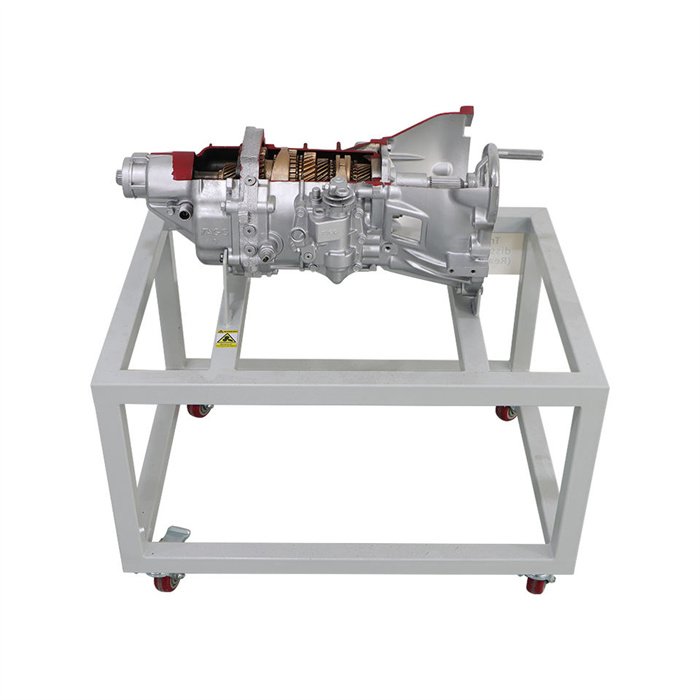
Focuses on transmission structure, operation, maintenance, measurement, and transmission-specific troubleshooting.
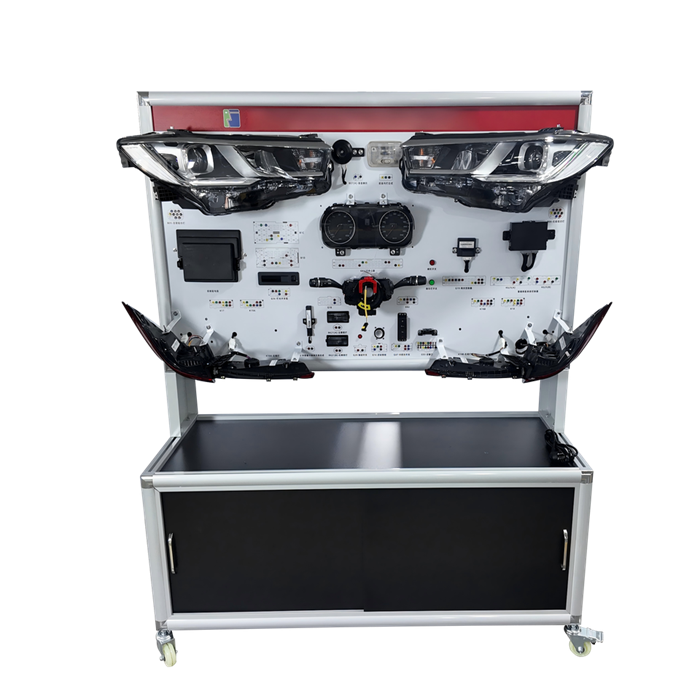
Focuses on engine operation, measurement, maintenance, and troubleshooting without the broader power-transfer scope.
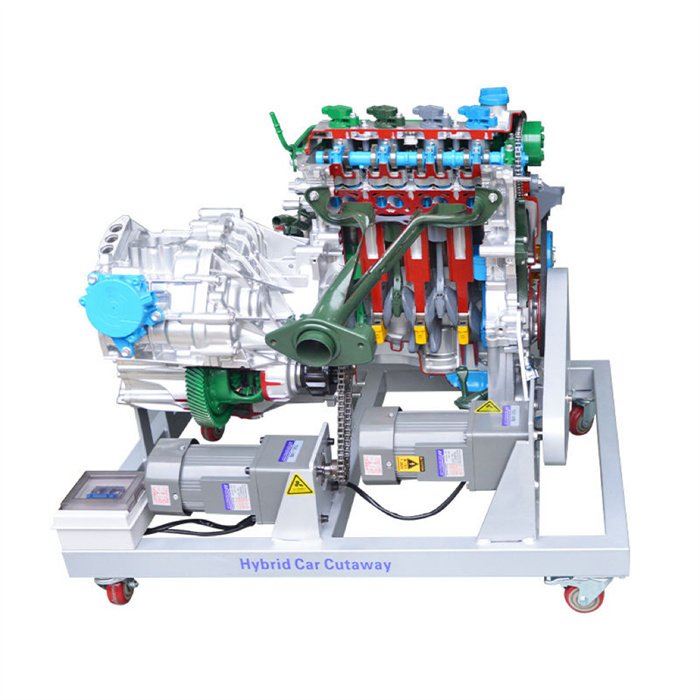
Focuses on visualizing hybrid engine structures, internal mechanisms, and configured powertrain relationships through cutaway demonstration.